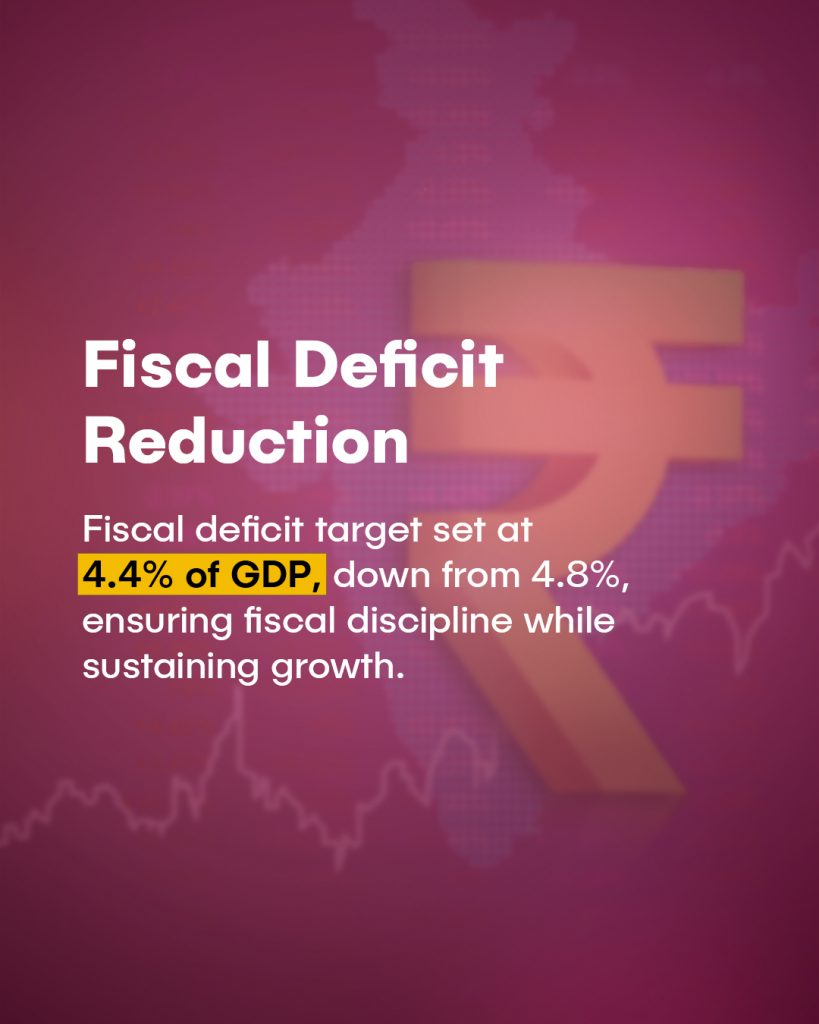
The 2024 interim budget was a preliminary financial plan ahead of the elections, while the 2025 Union Budget is a comprehensive, full-fledged budget designed to benefit a wide range of individuals and sectors. In her eighth budget presentation, Finance Minister Nirmala Sitharaman placed a special emphasis on the middle class, announcing a significant income tax cut while maintaining the fiscal deficit target of going below 4.5%, this year’s target is 4.4%, down from 4.8%.
Here are the key takeaways:
Zero Income Tax up to ₹12 Lakh: Salaried individuals earning up to ₹12 lakh will be tax-free. For salaried taxpayers, the limit increases to ₹12.75 lakh due to a standard deduction of ₹75,000. More details on the tax bill will be shared next week.
Increase in TDS Deduction Threshold for Rent: TDS will only be deducted on rent payments exceeding ₹6 lakh annually. Renters paying less than ₹6 lakh annually will be exempt from TDS deductions. This change makes it easier for landlords to manage payments without TDS deductions for amounts below this threshold.
Higher TDS Threshold for Senior Citizens on Interest Income: The TDS threshold on interest income for senior citizens has been raised from ₹50,000 to ₹1 lakh, boosting their post-retirement income.
Exemption on Withdrawals from National Savings Scheme Accounts: Withdrawals made from National Savings Scheme accounts after August 29, 2024, will be exempt from tax for senior and very senior citizens, providing greater liquidity and tax relief.
FDI Limit in the Insurance Sector Raised: The Foreign Direct Investment (FDI) limit in the insurance sector has been increased from 74% to 100%, allowing foreign companies to fully own insurance businesses in India. This move is expected to attract global capital, enhance competition, and improve service delivery in the insurance market.
Expansion of Atal Tinkering Labs: The government plans to establish 50,000 Atal Tinkering Labs in government schools over the next five years, providing students access to advanced technologies and fostering a culture of innovation from a young age.
BharatNet Project for Digital Connectivity: The BharatNet Project will provide broadband connectivity to all government secondary schools and primary health centers in rural areas, bridging the digital divide and supporting remote learning and telemedicine services.
IIT Infrastructure Development: The budget focuses on enhancing infrastructure at five IITs established after 2014, increasing capacity to accommodate an additional 6,500 students.
Leveraging Artificial Intelligence for Education: A ₹500 crore allocation has been made to establish a Centre of Excellence in AI for education, aimed at promoting research and the application of AI in education, improving personalized learning, and enhancing educational efficiency.
Expansion of Medical Education Seats: The budget proposes adding 10,000 seats in medical colleges and hospitals next year, with a total increase of 75,000 seats over the next five years to strengthen the healthcare workforce and improve access to medical services.
Modified UDAN Scheme to Enhance Regional Connectivity: The UDAN (Ude Desh Ka Aam Naagrik) scheme has been modified to introduce flights to 120 new destinations and facilitate air travel for 4 crore (40 million) passengers over the next decade. This initiative aims to make air travel more accessible to remote regions, stimulating economic growth and tourism. The scheme will also support the development of helipads and smaller airports in hilly and northeastern districts.
Allotment of ₹20000 crores to nuclear energy: Budget 2025 makes a big provision for the National Nuclear Energy Mission to meet the nation’s increasing power demands via nuclear energy. The provision will assist in the R&D of Small Modular Reactors (SMRs) that should be operational by 2033. This move also aims to provide 100 GWs of nuclear generated power by the year 2047.
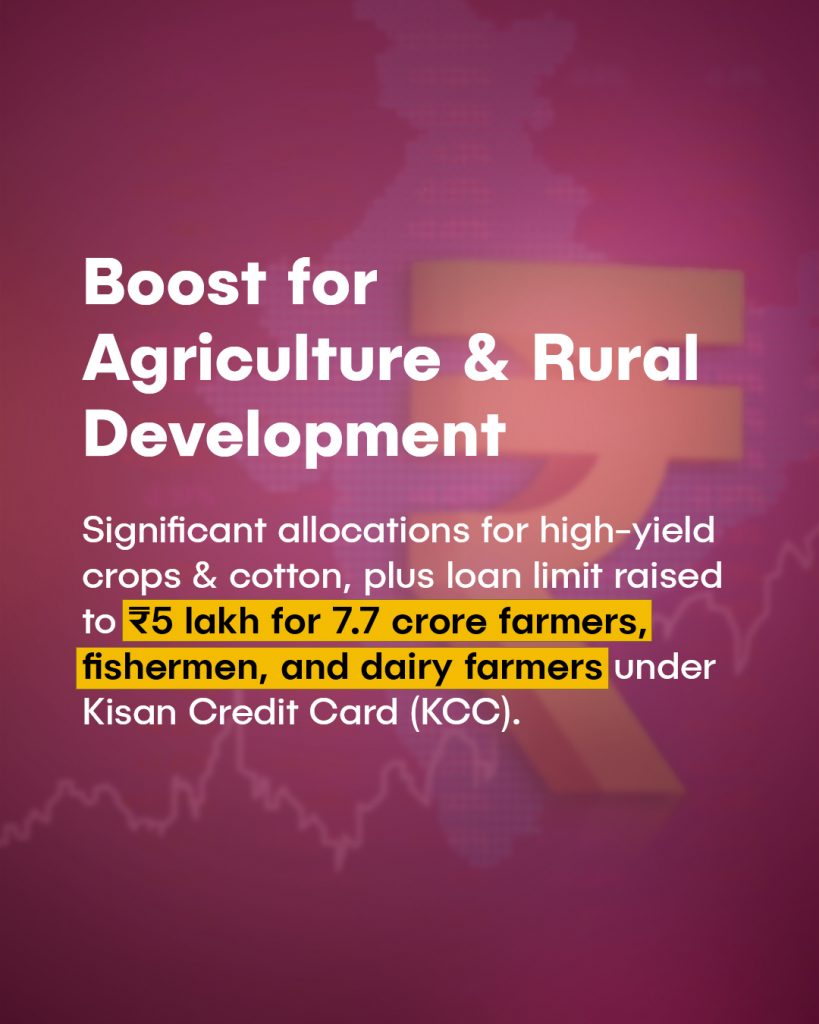
Kisan Credit Card loan limit increased to 5 lakhs: 7.7 crore farmers, fishermen and dairy farmers to benefit from the updated limit of 5 lakhs on their KCCs. ₹1000 crore to boost production of pulses pushing for self-reliance.
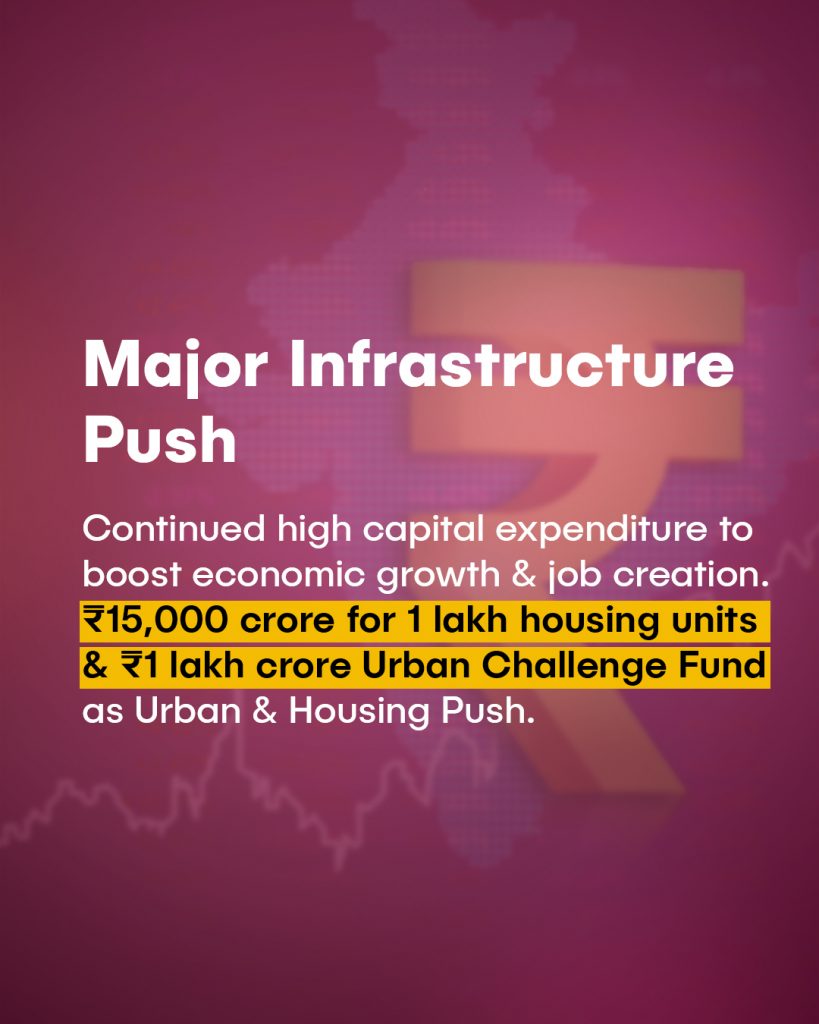
₹15000 crores for 1lakh housing units: SWAMIH Fund 2 (Special Window for Affordable and Mid-Income Housing) with ₹15,000 crore contribution aimed at quick completion of 1 lakh dwelling units boosting the real estate sector.
₹10000 crore push for startups: Investment of ₹10,000 crore to support startups through Alternate Investment Funds (AIFs). This amount will be added to an existing ₹10,000 crore Fund of Funds (FoF), managed by the Small Industries Development Bank of India (SIDBI), to boost the startup ecosystem.
Disclaimer: The information in this article is compiled from various sources and is not to be taken as a substitute for professional advice on managing finances, reader discretion is advised.
Great experience simplified
Available on Google Play and App Store. Download now.







.svg)
.svg)

