Financial Awareness
Stay ahead of online scams!

10 mins
May 27, 2025
.png)
Financial Awareness
10 mins
May 27, 2025
Online scams are spreading rapidly in India. According to a Lok Sabha reply there were 1.13 million financial cyber fraud cases reported in 2023 compared to 2,08,456 cases in 2018. That’s a colossal 442% increase. India is fast becoming a digitally savvy country, while this is inline with our Digital India goals, this has also become a lucrative playground for cyber criminals who get complex in their methods and bolder with newer technological advancements, the most recent one being Artificial Intelligence.
So, why are criminals using online means? Simple, because it is affordable, easy and they have a lesser chance of being caught. What is even more intriguing is the fact no one has been spared from the onslaught of these cyber crooks, for example, as per an FBI data report phishing calls by illegal Indian call centres in 2022 caused a loss of $10 billion to US citizens. This indicates the span and reach of damage cyber criminals can cause.
However, not all is lost, with every cybercrime taking place there is a lesson learnt. The government is taking every possible measure to make citizens aware about the kinds of scams and how to avoid falling prey to them. Let us tell you about them.
Digital Identity Theft
In the real world, you’ve a real identity and in the digital realm you’ve a digital identity. These can be as simple as your email address, your FB account login, debit/credit card details among others. Fundamentally your digital identity is the one that is used to make transactions and socialise in the digital world.
Identity theft is when cyber crooks steal personal or financial information to commit fraud, such as making unauthorised transactions or duping people connected to that identity, that can include colleagues, friends or relatives. 28% of all cybercrimes reported constitute identity theft according to Penacclaims.
The most common types of identity theft include
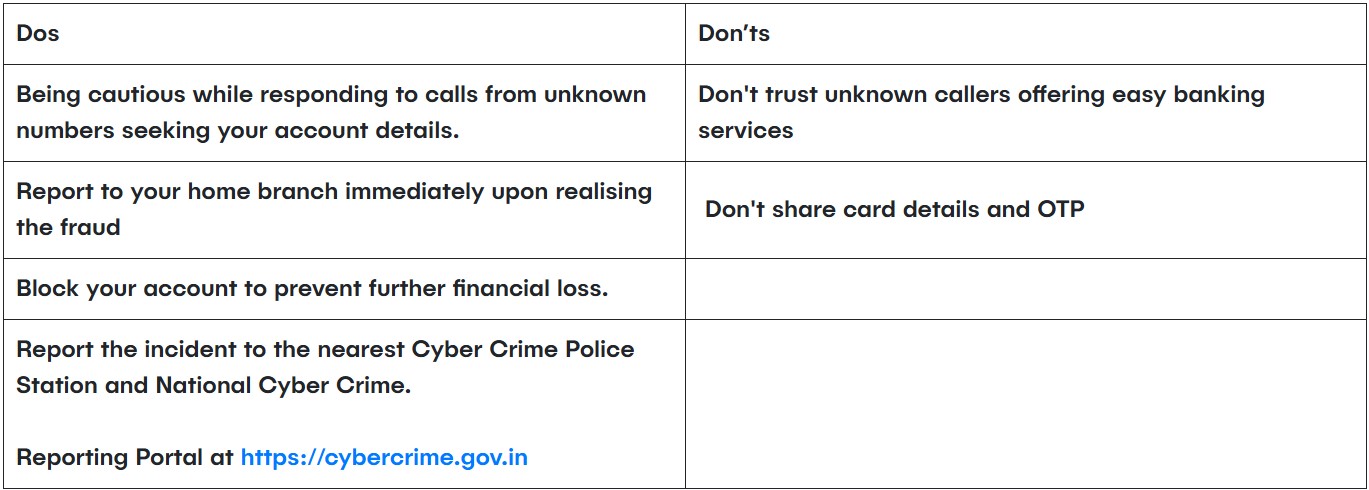
How to avoid identity theft frauds?
UPI Scams
UPI has revolutionised payments like never before and has significantly reduced the need for physical money to make transactions. However, as a part of the virtual world cyber crooks have found ways to leverage this convenience and make it a means to con people. UPI scams trick people into sharing UPI PIN or personal information leading to unauthorised access to your bank accounts. According to the finance ministry data over 95,000 cases of UPI fraud were reported in 2022-23.
Common UPI payment frauds include:
Fake UPI QR codes: Fraudsters trick people into scanning fraudulent QR codes that lead them to a website, where it asks for their personal and card details. Once entered, the fraudsters syphon off the money.
Fraud Sellers: These are found on popular eCommerce websites selling their products. Once these so-called products are bought, the buyer either receives nothing or something that is completely different from what they ordered.
Malware: Malware is software designed to gain unauthorised access to a computer system. This can be in the form of an email attachment or a link. Once downloaded or clicked upon it may disrupt your computer and give access to fraudsters.
Fake Payment Screenshots: Criminals dupe unsuspecting people by showing them fake payment screenshots on their mobile phones which leads the victims to believe that payment has been made to their account.
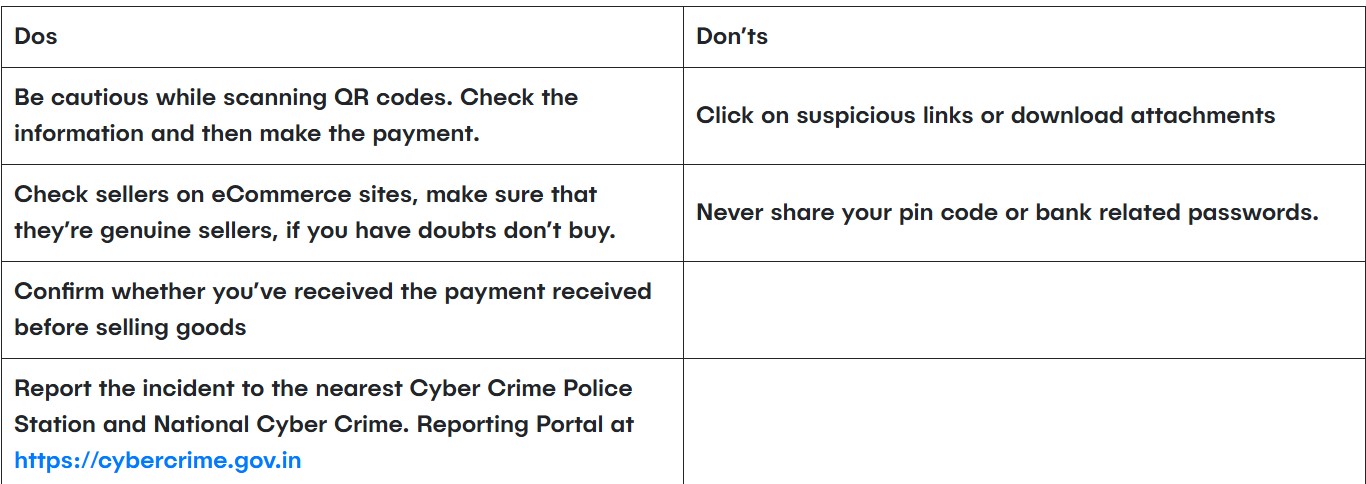
Avoid UPI scams with these dos and don’ts.
Fake Loan scams
Through digitalisation loans have become more accessible, however, not all have ready access to loans or credit services as there are many processes involved. Cyber crooks take advantage of these victims by offering them loans in lieu of a payment, once they receive the payment they vanish. According to the National Crime Record Bureau there were 9926 cases of digital loan fraud in 2023.
Common loan frauds are:
Ponzi Proposals: In Ponzi proposal scams fraudsters claim to give very high returns to gullible people. To keep the guise up investors are initially given high returns on investment, this prompts the investors to put in more money and bring in more people. The fraudster simply keeps moving money around while skimming some from themselves, by the time the investors realise the conman has already duped them of a lot of money, as this fraud continues for years without getting caught.
Pay-in-Advance Fraud: A very common tactic used by fake loan fraudsters. Once the scammers have convinced their victim of the probability of getting a loan they ask them to make an upfront payment, citing a no. of reasons, once the victim makes the payment the ‘bank’ disappears.
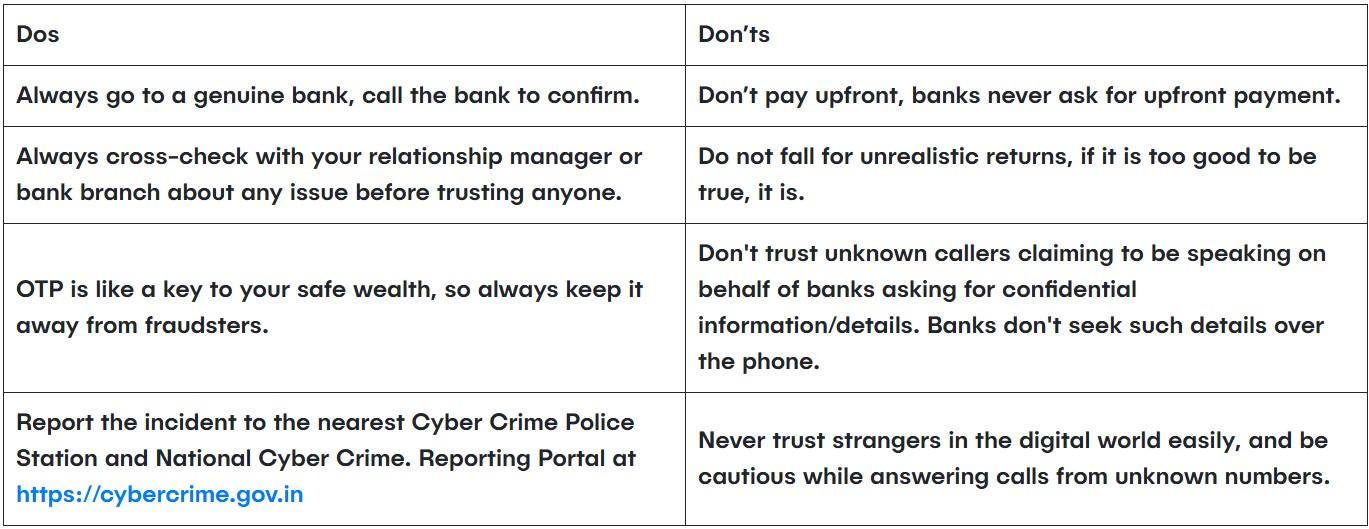
Have a look at these dos and don’ts to avoid falling in loan traps
Online Job Fraud
It involves offering fictitious job opportunities to job seekers and tricking them into paying money or providing personal information. As per Delhi Police job fraud complaints shot up by 84% in 2023. The dawn of working from home has made the scamsters change their way of working, they offer jobs in the form of data entry, putting ‘likes’ on social media, subscribing to videos and the lot. Crooks will then lure them into earning more by investing some amount of money. Once the victim invests money, the company cannot be found anywhere.
Types of online job frauds in India.
Work-from-home scams: Like mentioned above, these scams are aimed at duping people into paying up for a job or giving them the lucrative opportunity to earn more money. Once money exchanges hands, these fraudsters cannot be found anywhere.
Fake job offers: In this scam fraudsters will send a communication citing a job opportunity. Once you call them or communicate with them they’ll convince you to pay up for a variety of expenses related to securing the job. When they receive the payment they disappear.
Placement agency deception: Like fake job offers, placement agencies promise jobs that do not exist. Job seekers end up paying fees for services that aren’t really there, and the agencies vanish once they receive the payment.
Visa scams: Scamsters use the cover of international placement to con people. They’ll come with a job opportunity abroad that doesn’t exist to deceive people, and once they ensnare their prey, they’ll pressurise them for visa payments. Unknown victims will make the payment only to see their hard earned money gone forever.
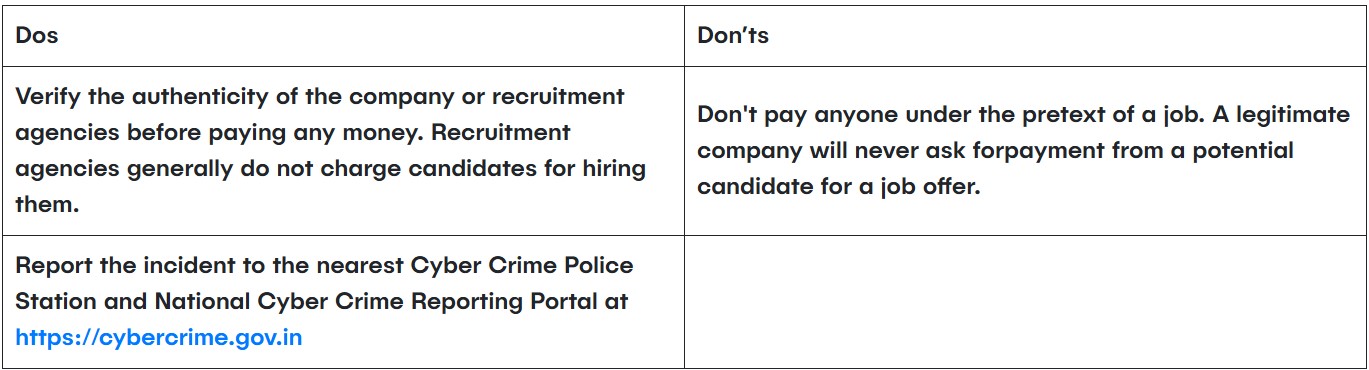
Job scams dos and don’ts.
Conclusion
The government is doing what it can to curb the menace of cybercrime, however limited knowledge and dynamic nature of these crimes make it a cumbersome job to be dealt with. Awareness is one such key that can help in reducing the instances of cybercrime and make fraudsters refrain from using their tactics.
Be aware, be safe and be too cool to be fooled!
Disclaimer: The information in this article is compiled from various sources and is an opinion piece only. This is not to be taken as a substitute for professional advice on managing finances, reader discretion is advised.
.svg)
.svg)
axio (formerly known as Capital Float, Walnut & Walnut 369) is the brand name of CapFloat Financial Services Private Limited, an NBFC registered with the RBI.
© 2025 axio. All rights reserved

